
Metroid Prime 4 or Metroid Prime Bore?
The wait for Metroid Prime 4: Beyond was long and arduous. This was a game that went through development hell. First announced at E3 (that alone should show the age of this announcement) on June 13, 2017, Metroid fans were given the faintest glimmer of hope that a new 3D adventure for Samus Aran was on the way.
In one of the craziest updates Nintendo has ever given, on January 25, 2019, the Nintendo gave an update that Metroid Prime 4 would be restarting its development due to lack of satisfaction with the current state of the project. The Bandai Namco development team was phased out for the familiar Retro Studios, the group from Texas responsible for the first three installments of the Metroid Prime series.
On June 18, 2024, the official trailer for Metroid Prime 4: Beyond was announced. The trailer featured a bombastic sequence that really put the visuals at the forefront. Samus and the worlds she explores have never looked slicker. Was the wait going to be worth it? Having still been high off of the latest 2D Metroid game, Metroid Dread, many were hopeful that this installment would be another success for the galaxy’s most revered bounty hunter.
On December 4, 2025, the long-awaited Metroid Prime 4: Beyond was released. I was champing at the bit to play this game and so was my father. He purchased the game for himself and about four or five months later, after he had completed the game, he passed the game cartridge off to me. This was a game that had launched simultaneously on both the original Nintendo Switch and the Nintendo Switch 2. The two versions were separated in price by $10, with the more premium Switch 2 version costing $70 in total. The new industry standard pricing for first-party games is a trend that Nintendo has thankfully started to address in the months following this release (Star Fox/Splatoon Raiders releasing at $50 dollars). I was able to purchase a $10 digital upgrade for my original Switch cartridge to be able to make full use of the enhanced power of the Switch 2. I could not help but compare this experience to the masterpiece Hollow Knight: Silksong, which had a similar upgrade for Switch 2 but was given for free. Long story short, despite originally being enthusiastic, I had a bit of a bad taste in my mouth from this game before ever booting it up. This was not a good sign.
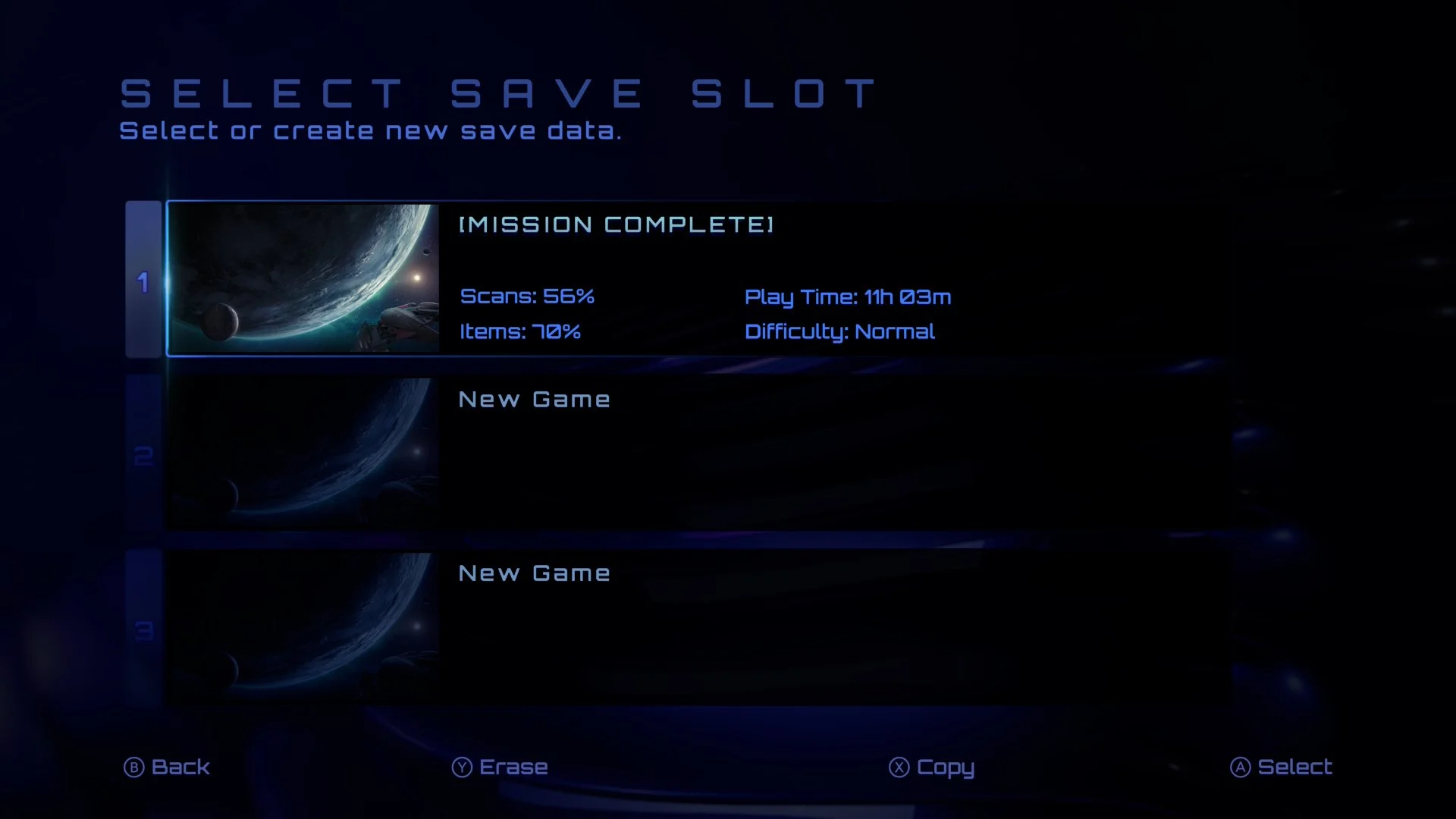
My first day of playing Metroid Prime 4 was a mixed bag. Visually, the game looks beautiful. Movement is snappy, the lighting on the game is stunning, and tons of action takes place in the opening segment. Unfortunately, this is where my praise ends for day one. I wanted to love the mouse controls, a new feature of the Switch 2 joy-cons which has been ridiculed ad nauseam. Despite fiddling with the sensitivity settings in the menu for a few minutes, no matter what I did, the controls felt imprecise, a bit clunky as the joy-con doesn’t quite contour to the hand like a mouse would, and overall unnecessary. The mouse controls are mainly an option, not a necessity, so I was willing to give it a pass. Other issues were more egregious. At one point, I had saved my game and returned to it a few hours later (I had fully closed the game). Upon selecting my save file, I waited on a loading screen for what seemed like three or four minutes! I was nervous that my game was broken but it was just a really long load time. The opening Metroid Prime 4 loading screen is just a black screen which did throw me off.
The true disappointment of the day came from the introduction of Myles MacKenzie. This fucking dumbass is one of the most annoying characters I have ever had to encounter. In a series where exploration and figuring things out has historically been the focus, it is insane that this guy refuses to shut up and just explains everything without end. I asked myself who this was for. Not quite in the same way a reactionary incel complains about inclusivity or representation in a video game, but I still was questioning the logic behind this inclusion. Unfortunately, the only way I could reconcile this choice was realizing Nintendo has targeted the new wave of gamers, who were perhaps meeting Samus Aran for the first time, and identified them as a bunch of idiots who need to be spoon fed everything. Given the impact that AI is having on the youth, it is a sad reality that Nintendo might have been correct in their assessment.
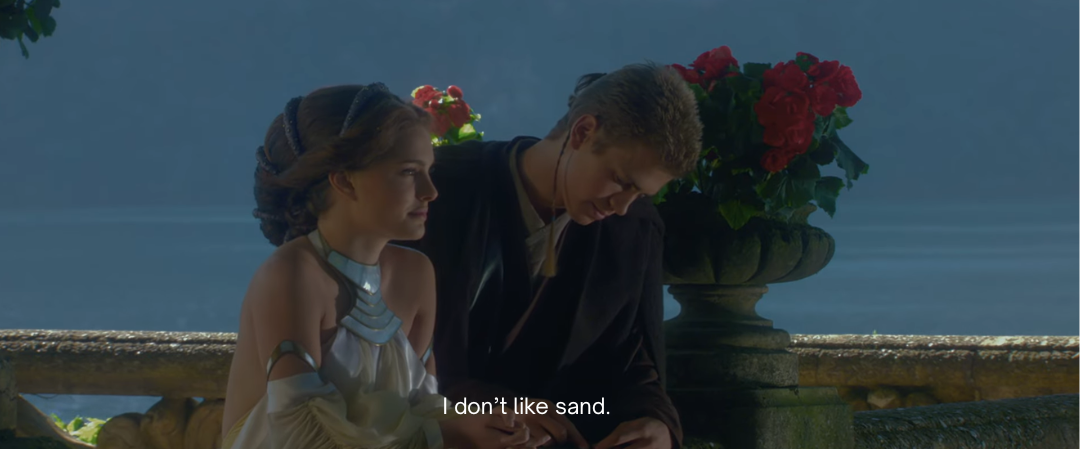
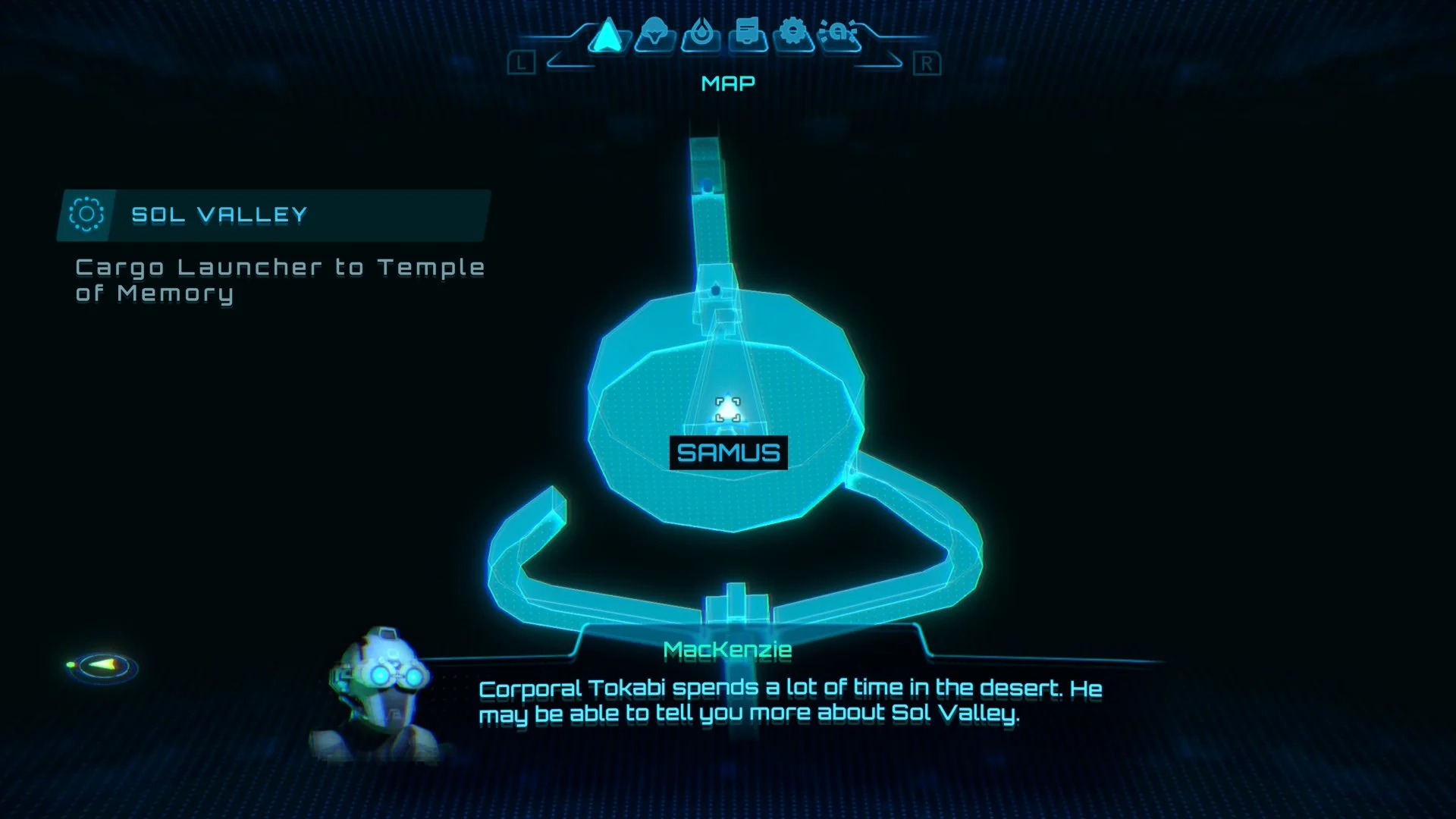
There are no shortage of irritations and aggravating moments I have come across during my playthrough. The open world desert is quite the headache. Perhaps the epitome of the empty open world trope, wherein developers make a vast and sprawling open world, yet forget to populate it with anything worth doing aside from traversing from point A to B. Other than the very cumbersome collection of scattered green crystals, it is just sand as far as the eye can see.
I would later read that Retro Studios found themselves at odds with the open world design, but due to the games first development restart, had to live with it.
https://kotaku.com/metroid-prime-4-devs-retro-stuck-open-world-hub-motorcycle-design-2000655694
The Vi-O-La motorcycle that Samus uses to traverse this desert is equally disappointing. Despite my speedometer indicating that I am going at ‘insane’ speeds, I feel that the bike is sluggish and rather flat in its acceleration curve. Having ridden actual motorcycles, I find myself missing the rush and magnitude that comes from the power of an actual bike. Vi-O-La feels like a two-wheeled golf cart. It cannot travel very quickly and reaches top speed without any dramatic acceleration. Nintendo games like Kirby Air Riders and F-Zero showcase speed and acceleration to such a better degree that it makes Metroid Prime 4 look sloppy in comparison.
The design of the Vi-O-La makes limited sense in the desert biome. It does not have the rugged qualities necessary to travel through sand. It looks more like a bike designed for the city commute. In addition, it later develops the ability to act as a hovercraft to overcome lava. I would argue that this is the form the bike should have taken from Jump Street. Similar to the Landspeeder that Luke Skywalker uses on Tatooine, having a hover vehicle would have worked well to give the player a taste of that cool sci-fi vibe Metroid is known for.
Even years later, the Metroid Prime series is still trying to be Halo for no reason. The series has only gotten more linear and bombastic with each new installment, but with so much time having passed, it is a shame to see Metroid Prime 4 continue that trend by shedding the interconnected lock and key exploration that is a staple of the Metroidvania genre as a whole. Even Metroid: Dread, a game I adore, refuses to let the player get lost in the world by putting the keys and locks to progression so close to each other.
The goal of Metroid Prime 4 is to acquire five teleporter keys that are spread out across the world. Despite feigning that the player will have choices as to which keys to pursue first, the player never has any choice at all. The sequence of events has already been scripted and the player can never stray far from the expected path without being berated by MacKenzie over the radio.
Exploring in this game is tedious at best. Backtracking is done in the form of returning to base camp to install upgrades (something that Samus could always do the moment she acquired a new power in previous installments). There are several instances of backtracking to base camp just to head right back to where the player picked up the upgrade. These moments were always incredibly frustrating. Trekking through the desert each and every time is also made more tedious by the location of the biomes. If base camp had been located in the center of the map, these sections would not have been nearly as annoying. Instead, the final dungeon, Chronos Tower, is located in the center of the map, a place the player will only ever access twice (once at the beginning of the game, and again at the finale).
The game also expects the player to shatter an absurd amount of green crystals in the desert. These crystals are required to get an item at the close of the game to unlock Chronos Tower. Despite breaking these crystals fairly studiously, I was still sent back into the desert near the end of the game for the sole purpose of driving around to break more. The Metroid Prime series has had a bad record of making the player do an unnecessary and often boring fetch quest at the end of the game as padding. Metroid Prime 4 does not deviate from this trend. To start this endeavor, one of the Federation soldiers has to be spoken to in the desert despite the fact that he can always be found at base camp. Just talk to me there!
Despite all of the hiccups, there are moments of greatness hidden in the dumpster fire. Many of the boss fights are unique and engaging. The bosses hit hard and require Samus to use every tool in her toolkit, not just the latest acquired upgrade. Unfortunately, these fights can drag on and on, far overstaying their welcome. Bosses are spongy and fights often devolve into a one-sided fight where the player has figured out how to successfully dodge most if not all of the enemy attacks but has to spend three to six minutes just waiting for an opening or whittling down the opposing health.
The final act of the game does not save it. A wicked hard boss fight against the main antagonist, Sylux, could have warranted praise, but throughout the fight Samus is charged with protecting the well-being of the Federation soldiers who show the survival instincts of a fish out of water. They run into enemy attacks and do not help enough to be labeled anything other than liabilities.
Then after section where using the mouse function is practically mandatory, Samus and Sylux find themselves in a 1v1 duel. The duel itself is not bad, but is certainly spoiled by having to replay the mouse section if you fail to defeat Sylux. Once Samus emerges victorious, she attempts to activate the teleporter to take everyone home. Sylux reappears despite just being defeated and damages the teleporter. The Federation troops hold Sylux back while yelling at Samus to go on without them. The player regains control for a brief moment where all they can do is abandon the soldiers by activating the teleporter before it is destroyed. If you attempt to assist your ‘team’ instead of activating the teleporter, you are met with a game over screen and are thrown back to the mouse section. Similar to the rest of the game, there is only the illusion of choice as only one action, one location, one upgrade represents progression and anything that deviates from the set path is punished severely. Frankly, I was ready for the game to be over so I did not hesitate to teleport out of there.
Overall, Metroid Prime 4 was disappointing. Visually, the game is stunning. This is perhaps the most graphically impressive game on the Switch 2, presently. Once the awe of the world fades, the player is left with a game which takes you on a guided tour of the planet and tries to masquerade this as freedom of exploration. Everything has a tinge of tedium baked into it. With the barrier to entry for the Switch 2 experience (the definitive way to experience this game) being so high (the price of the Switch 2 console was just raised to $500 from $450), I cannot recommend this game. For a better Metroidvania experience, you would be better off pursuing Metroid Dread ($60), Metroid Prime Remastered ($40) or buying both Hollow Knight and Hollow Knight: Silksong ($35).
